Bower Ashton, Kennel Lodge Rd
Bristol BS3 2JT
The Repair Acts Exhibition (2019) emerged from on-going dialogues among members of our first series of activities and meetings (2018-19), as well as early-stage research into the history of repair business in Bristol and prior research on mending practices in the South West of England (My Square Mile). Exhibiting artists include Ravi Agarwal, Teresa Dillon, Arthur Buxton, Carmela Pietrangelo, Ben Gaulon, Anna Mills, Steve Bond, Caitline DeSilvey, Robert (Bob) Leadbeater and Nick Hand.
The Repair Acts (2019) exhibition focused on labour practices, the aesthetics of failure, planned obsolescence and the contemporary relevance of tradition, craft and skill. The work collectively reflects on the fragility of the material world and our bounded, physical, entanglements with it. As Elizabeth V. Spelman notes in her book ‘Repair: The Impulse to Restore in a Fragile World’ (2003):
“To think about repair requires us to recognize our own failures and imperfections and those of the world we live in…” (p. 138).
These imperfections in part, relate to what infrastructure scholar Steven Jackson calls ‘broken world thinking’, whereby life itself is constituted in relation to the care of existing ‘things’, as opposed to the continual invention off the new. This orientation is identified by Mierle Laderman Ukeles in her seminal ‘Manifesto for Maintenance Art" (1969) as the ‘life instinct’, which she describes as the eternal return to doing what is required for the maintenance, equilibrium and survival of all species.
The focus for the exhibition extends beyond the professional realm of arts and crafts into the daily labours involved in picking up, sorting out and dealing with dirt, the discarded and wasted.
Exhibiting Artists
Trace City, Ravi Agarwal — In the aura of everything marginal lies signs of our futures. Ravi Agarwal’s Trace City series documents landfill sites in India.
The Body Marks #1, Teresa Dillon — The daily position that a shoe repairer takes on the streets in New Delhi becomes the focal point of the image.
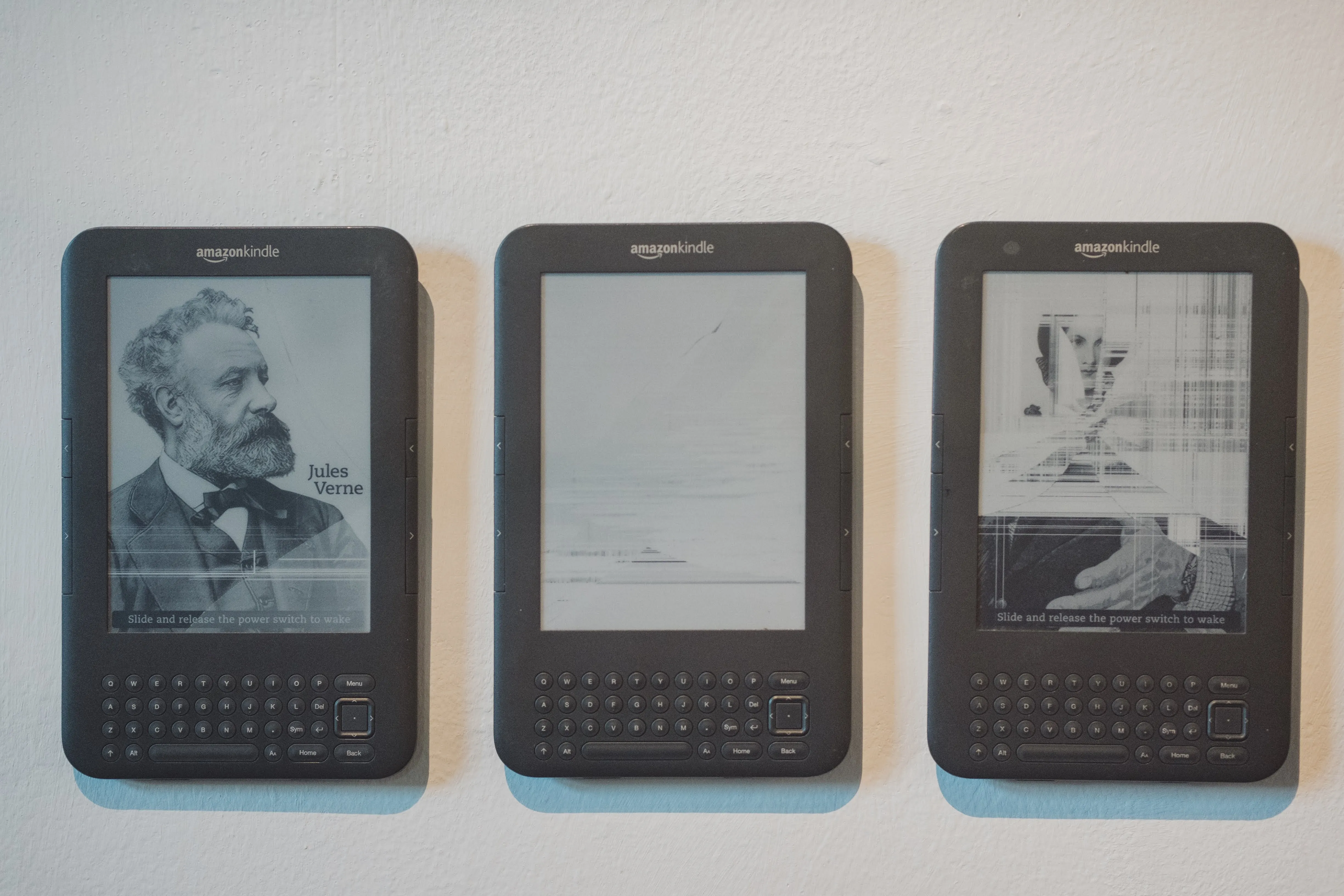
Kindle Glitched, Ben Gaulon — Exploring the aesthetics of planned obsolescence, Kindle Glitched is a series of broken Kindles donated, found or bought on eBay and signed by the artist.
Coded Boilersuit, Anna Mills — Coded Boilersuit explores how everyday white goods are increasingly becoming locked down, requiring diagnostic software to detect and fix the broken parts.
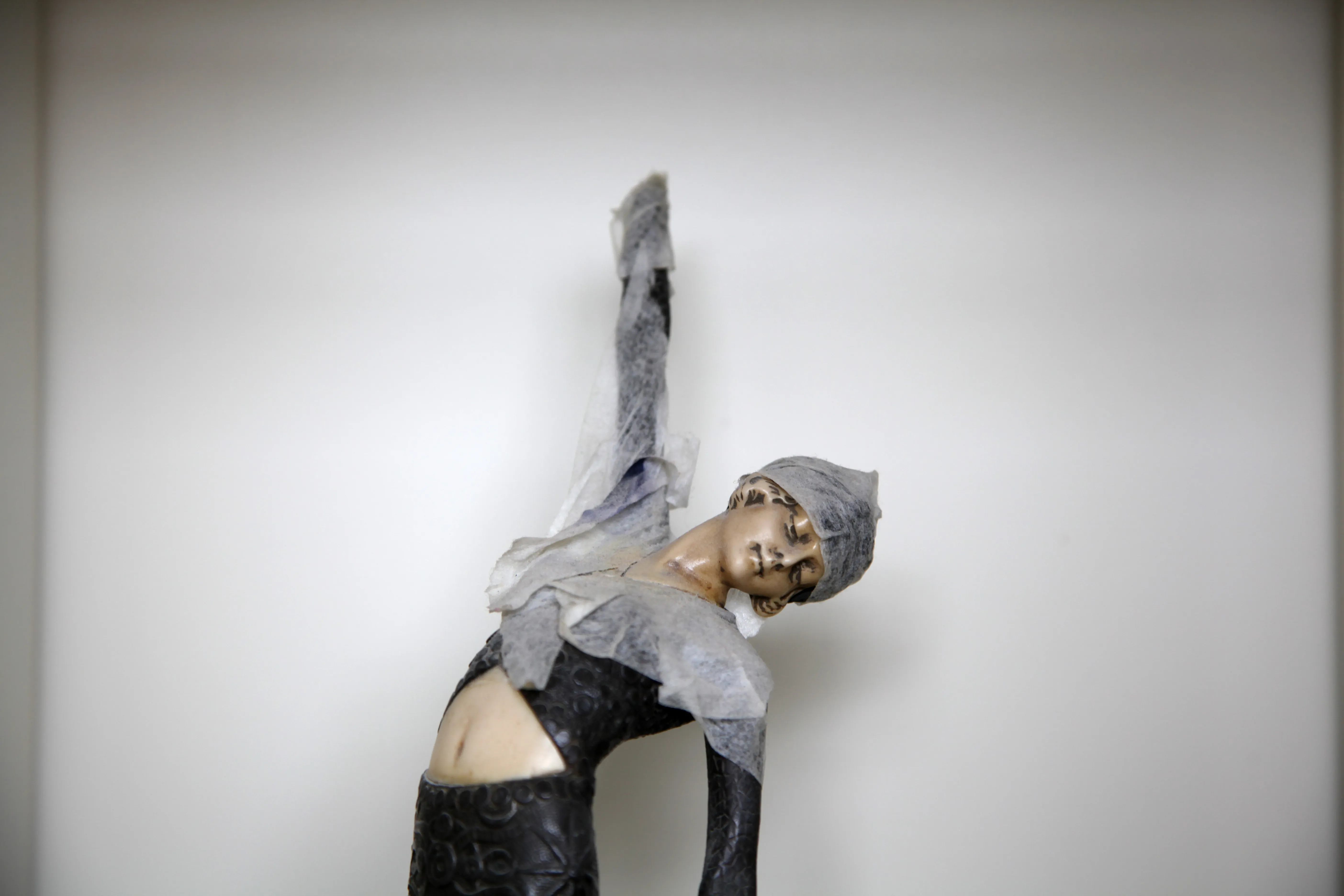
Figurine under repair in Helen Warren’s Workshop, Steve Bond and Caitlin DeSilvey — Taken from the project Small is Beautiful? Visual and Material Cultures of Making and Mending.
A Collection of Objects Representing Repair, Teresa Dillon, Caitlin DeSilvey and Steve Bond — At each workshop, participants were asked to bring with them an object which represented what ‘repair’ meant to them.
Small is Beautiful?, Steve Bond and Caitlin DeSilvey — A two year (2010-2012) project documenting workplaces in the South West where people fix broken things.
Vintage Amp Repair, Robert Leadbeater — Sound engineer and amp repairer demonstrating the steps necessary for repairing a vintage Italian amplifier.
Letterpress Collective, Printing Bike, Nick Hand — In 2013, Nick Hand built a bicycle that could carry an Adana 8×5 printing press.
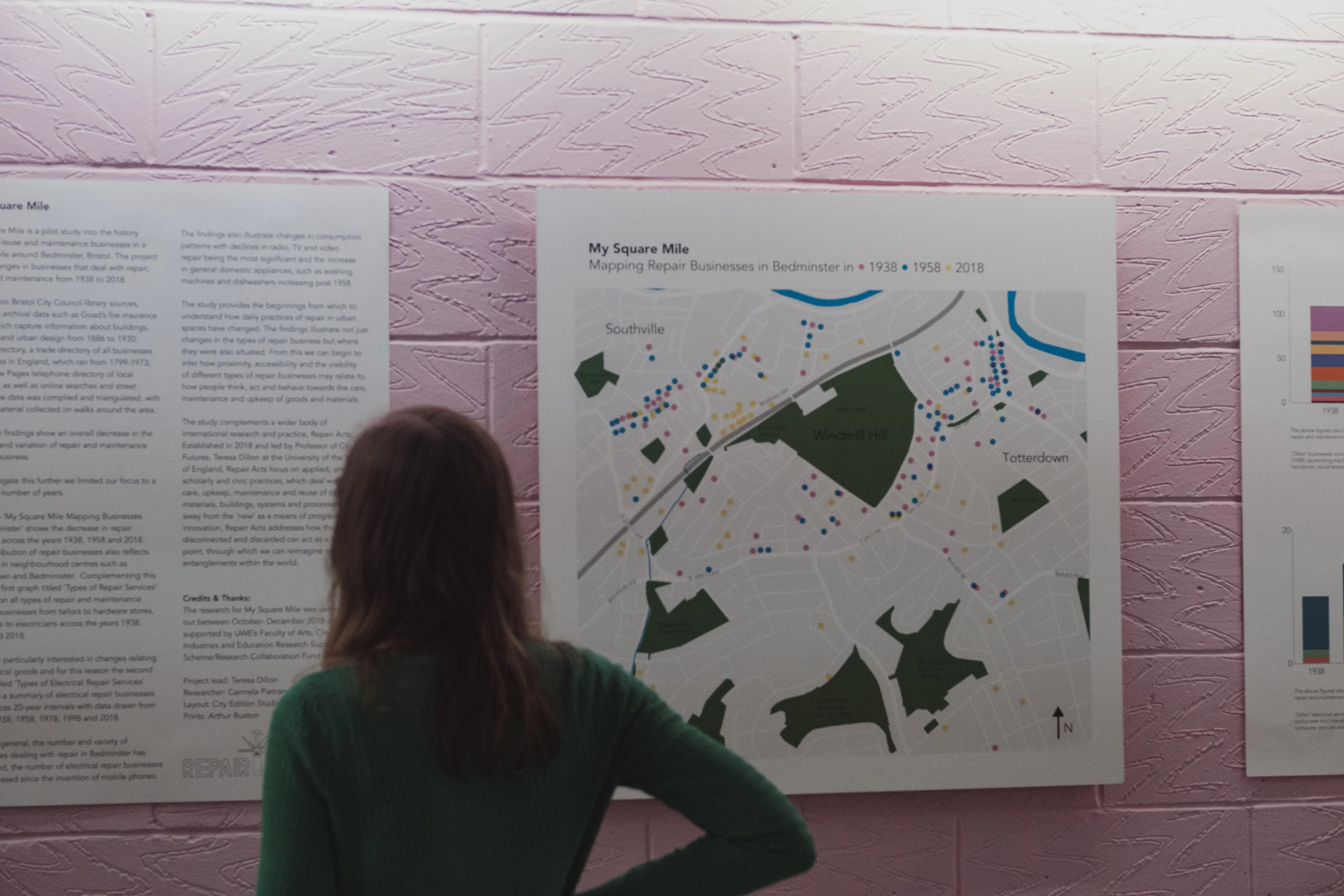
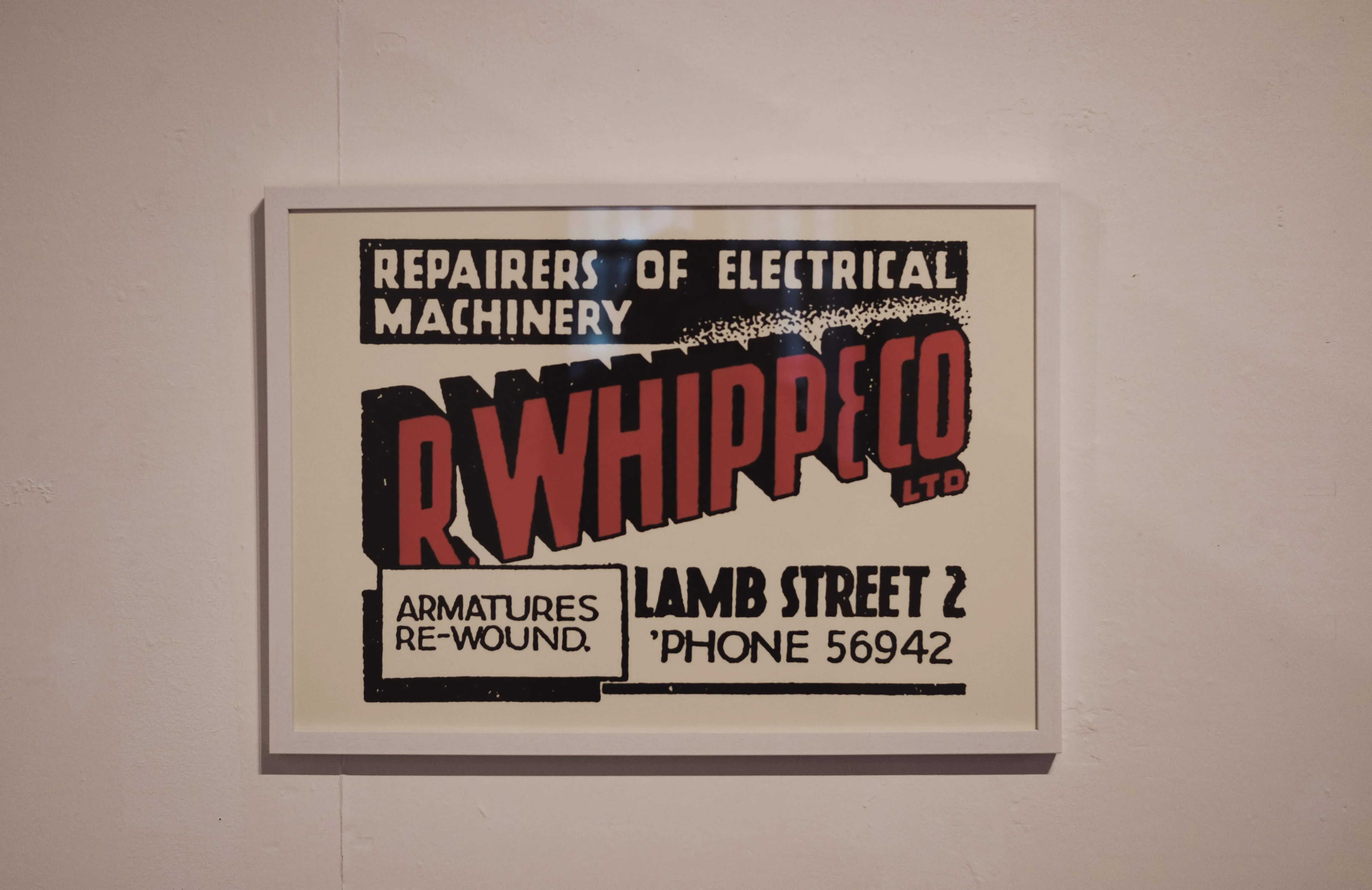
My Square Mile, Teresa Dillon, Arthur Buxton and Carmela Pietrangelo — Research on the history of repair business within a square mile of Bristol city.
Curated by: Teresa Dillon
Thanks to: Carmela Pietrangelo (research and production assistance), Steve Bond and Jono Lewarne (image preparation), Ben Barter at the Digital Print Studio UWE, Michelle Scoplin and staff at CREATE (in-kind support).
Funding: AHRC Network grant scheme 2018–19, led by Teresa Dillon at UWE. My Square Mile supported by UWE’s Faculty of Arts, Creative Industries and Education Research Support Scheme.